Denim Hellscape
Exploring the denim history, slopconomy, and a future.

Every single day of my existence is a day to dwell on the many banes of womanhood, of all things I found particularly interesting recently are the God-awful design of women’s jeans. There are no good pairs of jeans to be found anywhere in retail outlets unless you surrender to the nature of their poorly produced jeans and excessive marketing. While I fuss about the declining quality of jeans, there are at least five denim campaigns being shoved into my face at the moment. Many of these being thanks to whatever denim Cold War Sydney Sweeney started with her unsettling American Eagle collaboration. Addison Rae follows with a Luckybrand collaboration, Katseye pulls out a trendy dance choreography for their eventually viral Gap commercial and Beyonce collaborates with Levi for jeans which is very on her brand with her current Cowboy Carter era and last and definitely least; a series of cheesy denim advertisements by Superbalist force fed to me on Instagram reels.
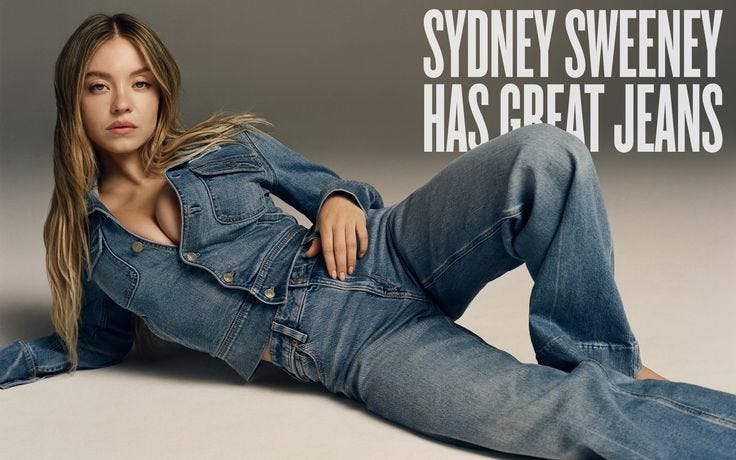
Taking a look at recent denim advertising, it really feels like we live in the best time of denim. There’s a plethora of designs to choose from, with dozens of major clothing companies offering a range of curve wear jeans, different cuts, and every era of denim trends from the God-forsaken skinny fit to bootcuts and baggier fits, yet something still feels off. I can never find something that’s quite right. I can’t help but feel like I’m being a picky Goldylocs of jeans, when I’m gaslit into thinking that everything is the best it’s ever been.
One of the many very obvious problems with women’s jeans that has been discussed so tirelessly are the comically small or literally non-existent pockets on woman jeans. I could just add on that but I think there’s a big enough spectacle on the matter of the pockets of women’s jeans that has existed at least since 2017. The underlying reason that has been established for these obnoxiously small pockets is the prioritised prime function of the jeans that they must be flattering to the figure of the female body. My take on this way of designing jeans this way? Boring!
In all honesty I felt rather frivolous contemplating on genuinely writing a piece on denim. Why am I adding onto an already large spectacle of denim discourse? Well the more I dug into denim, the more I realised its social and political influences, or rather how the fabric itself influenced the social and cultural landscape. In addition to this, the need to understand the dreadful design in women’s jeans gnaws at my soul everyday.
Initially, denim as fabric was merely a generic textile that was mainly utilitarian. Worn by construction and factory workers, there seemed to be nothing particularly striking about this fabric outside of its strength and functionality. If anything it was an indicator of lower working class people involved in manual labour. The early wearers of jeans could have never imagined the fashion phenomenon they are today, or even the jarringly low quality of jeans sold today.
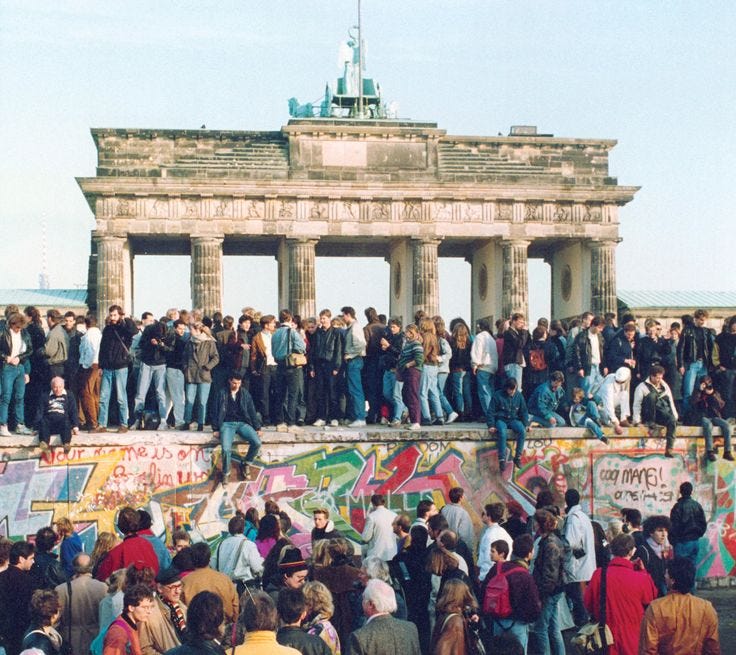
The integration of denim into fashion was revolutionary, not just as laying the groundwork for the fashion phenomenon they are today, but also as a social and political uniform to some extent. Denim became a sort of unspoken uniform in working class, civil rights and gay rights struggles. Even looking at the footage of the fall of the Berlin Wall one will easily recognise the abundance of jeans. This prominence of jeans in these instances don’t seem to be entirely intentional. Jeans were everyday-wear for the average person, and so the choice of denim was a fitting choice if not a blindingly obvious one.
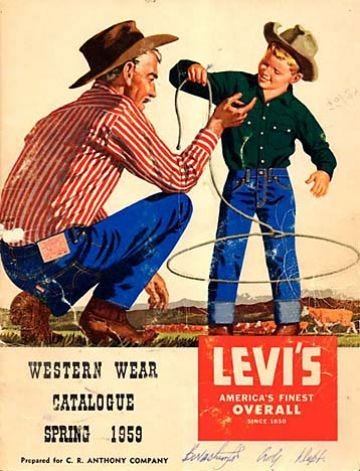
By the 70s jeans leaked into the mainstream, no longer being the niche signifier of service workers, biker counter cultures, and associated social movements as they were before. Following WW2 and the thriving American economy jump-starting their signiture culture of consumerism, many people had enough disposable income to spend, more people were able to buy the jeans and felt inclined to do so. I often imagine just how cool jeans must have been around this time. This piece of clothing seemed to have a transcendental quality as a staple across men and women.
Not to mention Americana was and is still deeply embedded in this clothing item. It’s history with the service workers of war and cowboys. I also couldn’t help but sarcastically theorise ideas like this having to do with recession indicators or american neo-fascism or whatever else that is so #back right now.
During the time I coincidently found myself in the clothing stores of malls often. Helping my friends shop for something or me myself shopping for something. And so neither me or the people I’ve been out at the mall with, have resisted ritualistic urge of window shopping. From walking into the denim filled front display at Cotton On,to an equally obnoxious one just a store away. For every painfully saturated display that I saw, I started to wonder why they were so important to us. And why is it objectively true to all of us that they just don’t make it like they used to, yet there are such an endless variety of them. I sometimes find myself thinking that more of us should mourn the era of good jeans as we shop them at thrift stores. Does the excessive quantity of designs distract us from the quickly and poorly designed products that the retailers mass produce?
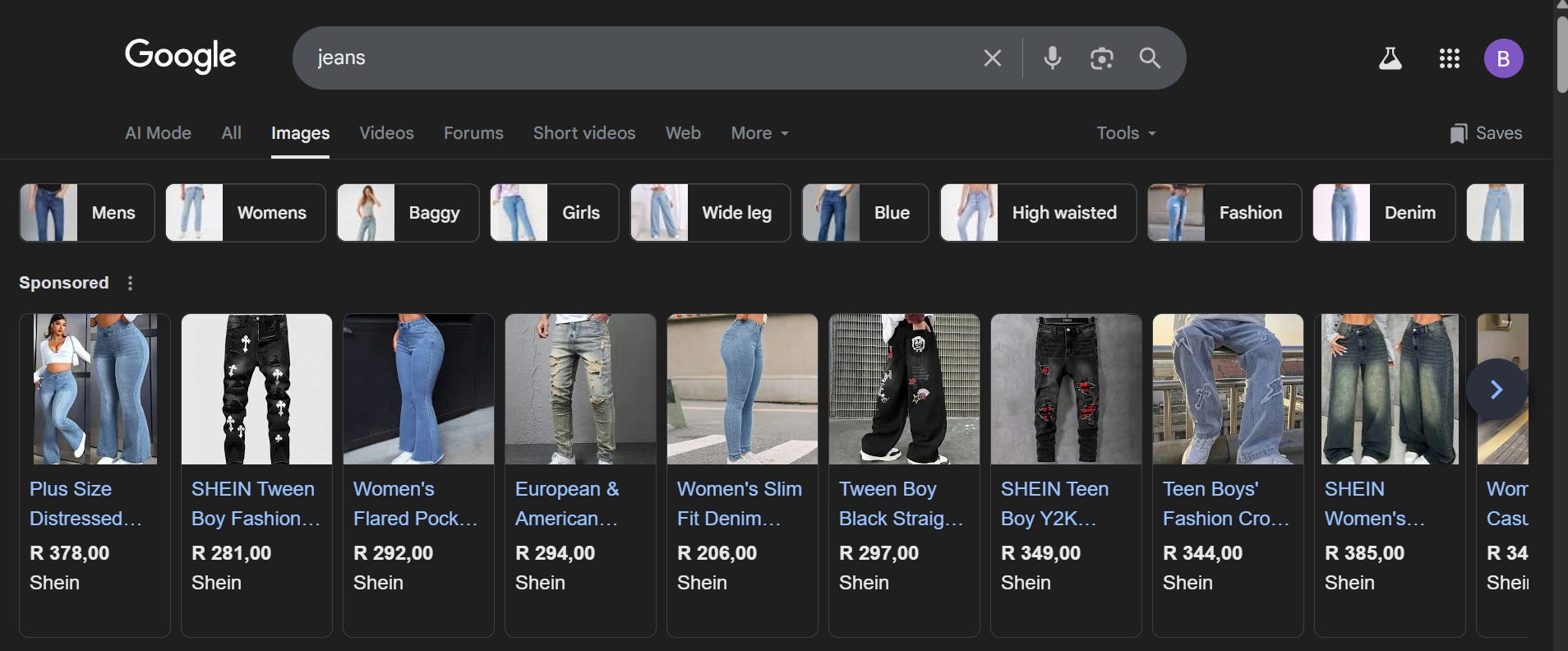
I think we are all deeply aware of the depreciation of denim. It is also why we are very aware of the fact that thrifted denim is just better. In knowing this, I feel as though we’re actually mourning an era where the manufacturers and the commercial fashion industry had some dignity. Retail stores actually had serious a role in the fashion industry. They actually spent time conceptualising and designing clothes for months and hoping they’d sell. Clothes were carefully proportioned and sized. Zips were fitted onto the jeans with the same great craftsmenship seen in the seams of the pants.
The depreciation of jeans and their quality interests me more then any other piece of clothing is because longevity was a key quality of jeans. The jeans could keep their shape after many washes, aged tastefully and could always be passed on. They were actually 100% cotton, not filled with elastane micro-plastic. I think that’s where some of the timelessness of the fabric lies. Maybe thats why jeans seem to look worse now despite there being an endless variety of them. What’s on the market doesn’t have the classic an timeless feel of meticulous craftsmenship. The longevity of the jean has it’s own sense of time, and a guarantee of future.